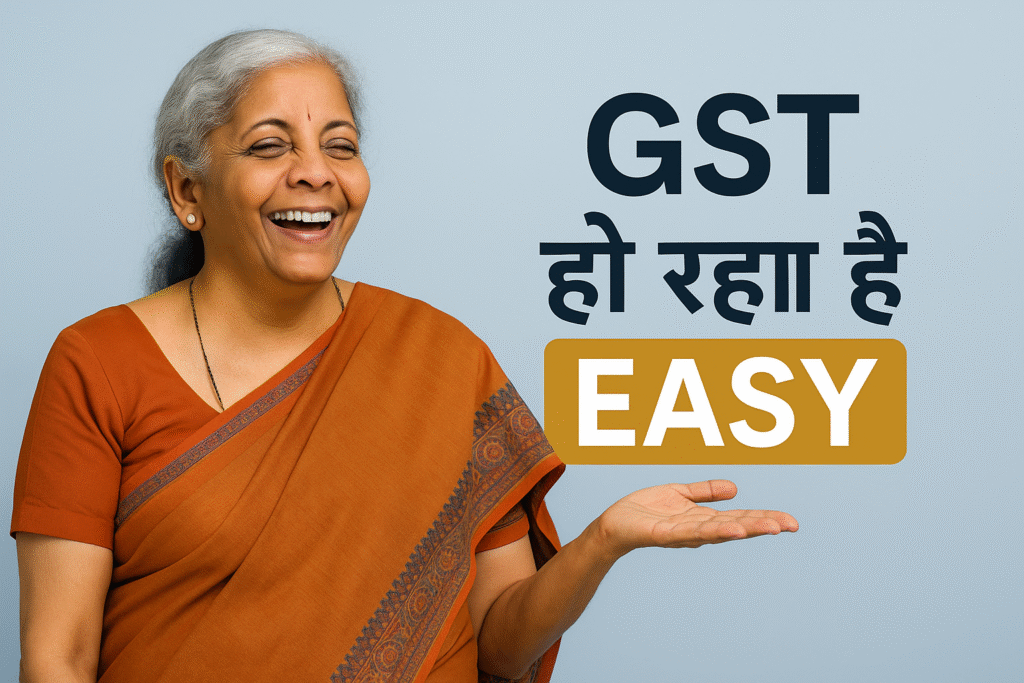
जब Goods and Services Tax (GST) 2017 में introduce हुआ था, तब उसका मक़सद था – One Nation, One Tax. लेकिन ground reality में system इतना आसान नहीं रहा। Multiple slabs (0%, 5%, 12%, 18%, 28%) ने confusion create किया। Businesses, consumers aur tax authorities – sabhi को rate classification aur compliance mein problem hoti रही।
अब October 2025 में सरकार ek बड़े GST Reforms लाने जा रही है, jismein पूरे system ko simplify karke सिर्फ Two Main Slabs (5% aur 18%) aur ek special 40% slab (luxury/sin goods ke liye) rakha jayega.
इस blog mein hum detail mein samjhenge:
- Current GST system ki problems
- Two-slab simplification kya hai?
- Kaunse goods kis slab mein shift honge
- Businesses aur consumers pe impact
- Benefits aur challenges
- Long-term Indian economy ke liye iska matlab
Current GST System – Kyu Complicated Hai?
Aaj ke time pe GST system mein 5 major slabs hain:
- 0% slab – Basic essentials (atta, chawal, sabzi, fruits, etc.)
- 5% slab – Commonly used items (edible oil, footwear below ₹1000, basic medicines)
- 12% slab – Processed food, mobile phones, fruit juices, fertilizers
- 18% slab – Daily use consumer goods (soap, toothpaste, shampoos, electronics)
- 28% slab – Luxury aur sin goods (cars, cigarettes, air conditioners, pan masala)
Problem kya hai?
- Classification disputes: Same product alag-alag rate slab mein fall kar sakta hai. Example – biscuits (some 18%, some 12%).
- High compliance cost: Businesses ko bahut detailed accounting karna padta hai.
- Consumer confusion: Same type ke items pe alag tax rate.
- Litigation aur disputes: Companies aur GST officers ke beech lagataar case hote rehte hain.
The Big Reform: Two-Slab Structure
Government propose kar rahi hai ek simplified system:
- 5% slab: Daily essential goods aur kuch services.
- 18% slab: Majority of goods and services.
- 40% special slab: Luxury aur sin goods (tobacco, cigarettes, pan masala, high-end cars).
Kaunse items shift honge?
- 12% slab ke 99% items → 5% slab mein aa jayenge.
- 28% slab ke 90% items → 18% slab mein shift honge.
- Sirf tobacco, pan masala, aur kuch luxury goods hi 40% slab mein rahenge.
Example Samajhiye
- Mobile phones (currently 12%) → 5%
- Matlab ₹20,000 ke phone pe ab ₹2400 GST ke badle sirf ₹1000 GST.
- Direct price cut for consumers.
2. Small cars (currently 28%) → 18%
- ₹5 lakh car pe pehle GST = ₹1.4 lakh (28%).
- Ab GST = ₹90,000 (18%).
- Effective price kam, demand badhegi.
3. Health & Life Insurance Premiums (currently 18%) → 5% or even Exempt
- Premiums cheaper honge, zyada log insurance afford kar paayenge.
Benefits of Two-Slab GST
1. Simplification = Less Confusion
Ab consumer aur businessman dono ko clear hoga – ya to 5% ya 18%. Compliance easy hogi.
2. Cheaper Goods for Consumers
- Essential aur mid-range goods ke rates ghatne se prices kam honge.
- Middle-class aur lower-income families ko direct benefit.
3. Boost to Consumption
- Car, mobile phones, insurance jaise sectors mein demand surge hoga.
- Zyada demand → Zyada production → Jobs creation.
4. Ease of Doing Business
- MSMEs aur startups ke liye compliance cost reduce hogi.
- Litigation cases kam honge.
5. Inflation Control
- Prices kam hone se overall inflation control mein reh sakti hai.
Challenges and Concerns
1. Revenue Loss for Government
- Agar 28% aur 12% slabs ko hata diya, to tax collection pe impact hoga.
- Estimates ke hisaab se ₹45,000 crore – ₹85,000 crore annual loss ho sakta hai.
2. States ka Opposition
- State governments ko lag raha hai unka revenue share kam hoga.
- Compensation ke liye central government pe pressure banega.
3. Transition Problems
- Businesses ko apne accounting systems, invoices, software update karne padenge.
- Short-term confusion create ho sakta hai.
Impact on Key Sectors
1. Automobile Sector
- Entry-level aur small cars ke rates girne se demand boost.
- Electric vehicles aur affordable cars ka market expand hoga.
2. Insurance Sector
- Health aur life insurance affordable hone se penetration badhega.
- Rural India tak insurance reach karne mein help.
3. Electronics & Mobile Phones
- India world’s 2nd largest smartphone market hai. 5% GST slab ka matlab hai prices down → sales up.
- Local manufacturing ko bhi push milega.
4. MSME & Startups
- Compliance burden reduce hone se unka focus production aur sales pe hoga.
- Litigation aur classification disputes kam.
Global Comparison
- UK & EU: Mostly 2-3 VAT rates (standard + reduced).
- Singapore: Flat GST rate (9%).
- India ab simplify hone ke baad global best practices ke closer ho jayegi.
Long-Term Implications
- India ke liye yeh biggest GST reform since 2017 hoga.
- Economy ko boost, compliance ko simplify aur consumption ko push karega.
- Lekin agar revenue loss ka solution nahi mila, to fiscal deficit aur borrowing increase ho sakta hai.
Conclusion
GST ka purpose tha – Simple, Transparent, and Efficient Tax System. Lekin multiple slabs ne usko complex bana diya. Ab Two-Slab GST Reform (5% aur 18%) ek game-changer ban sakta hai.
- Consumers ko cheap products milenge.
- Businesses ko compliance ka tension kam hoga.
- Economy mein demand aur growth dono badhega.
Yes, revenue aur state concerns ko manage karna padega, lekin overall yeh historic reform India ke consumption-driven growth model ko accelerate karega.